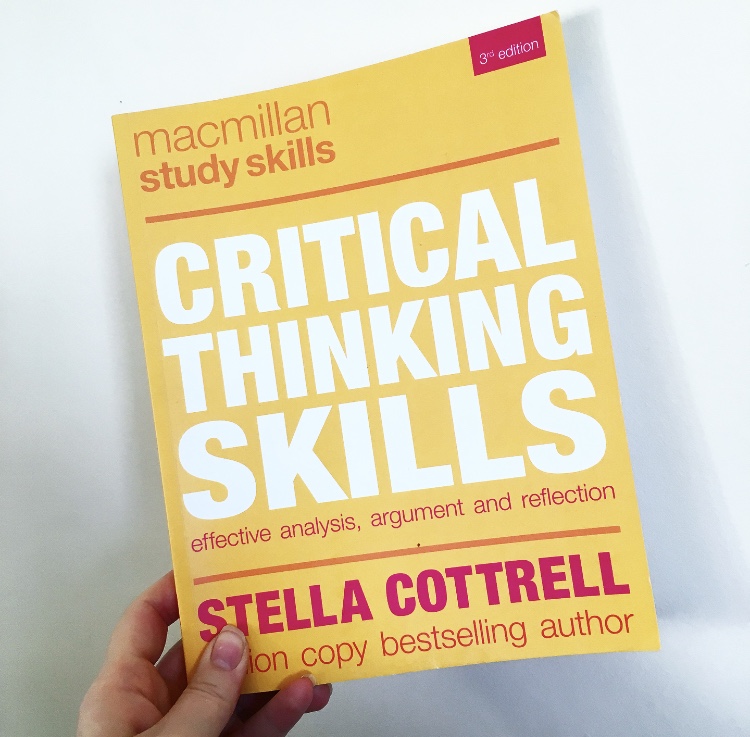
Critical analysis is one of those really annoying parts of an essay, however it is needed and it is where most of your marks come from, especially as you go up years in uni. So we’re going to help you, and ourselves, get better!
CA is the ability to work out within a problem or question, what is and isn’t important information, e.g. the fact that this couple often argued isn’t relevant in a case of constructive trusts.
- You must apply the knowledge you’ve learnt from your lectures and outside reading to the problem/question.
- Explain information in a concise and clear manner without repetition (this negatively impacts the word count!)
- Work out what the best solution to the given problem/question is, or the best argument that can be made
- Explain clearly why you have selected this solution/argument. Even if it’s not actually the best solution/argument, explaining how you came to this conclusion can actually gain you marks!
Descriptive VS Critical
Descriptive;
- States what happened,
- Explains how something works,
- Explains what a theory says,
- States the order in which things happened,
- Gives the story so far,
- States what something is like
Critical;
- Shows why something is relevant or suitable,
- Indicates why something will work the best,
- Weighs one piece of information against the another,
- Evaluates, and judges the value of, strengths and weakness,
- Makes reasoned judgements,
- Identified the significance
To be critical you need to back up your opinions with evidence, show that you can do more than state arguments but actually asses the merits of a given argument, weigh pros and con against each other. This will show that you have a wider understanding of your topic, rather than just the ability to repeat information. Of course this means a lot more wider reading around the topic – wonderful! More reading!
The typical characteristics of critical writing include;
- Content – reasoning, relevant evidence, compare and assess alternative arguments, formulate your own opinion regarding the evidence.
- Audience – consider how what you write will influence those reading it, will it be persuasive?
- Clarity – your writing must be clear, concise and easily understandable. You wont gain marks if your marker cant flow your train of thought.
- Analysis – look at the evidence in both an in depth detailed and critical manner.
- Select evidence – look at your points, what evidence do you have to back it up? Is this a key point or does it seem like too much unnecessary information, potentially subtracting from the main argument?
- Sequence – begin with good planning so that the most important points stand out clearly and make sure they connect to each other, e.g. a clear flow between the points.
Read → Interpret and Understand → Apply → Analyse → Evaluate → Conclude
 The Law Student Diaries